
Washington Township Previous Residents Sources
The backward trail is a sequence of dated record layers, not a single database. Start with the parcel now associated with the address, then move backward through recorded documents and annual property context before adding household sources. Each layer answers a narrower question: a deed identifies transfer parties, a tax duplicate gives annual property context, a directory or census may place a named household at an address in a stated period, and a permit can document a project or public action. None should be substituted for the others.
| Source | Years It Covers | Where Held | What It Shows |
|---|---|---|---|
| Recorder deeds | 1805-present, per county guide | Montgomery County Recorder, RISS gate, or office terminals | Recorded transfer parties, dates, instruments, and legal or plat descriptions. |
| Archive deed records and indexes | Main page says deeds 1805-1933 and indexes 1805-1928; county guide says deeds 1805-1971 | Montgomery County Records Center & Archives | Older deed and index leads. Confirm the applicable endpoint with staff because county sources conflict. |
| Auditor tax records | 1984-present | Montgomery County Auditor | Current and historical assessment or tax context for the stated tax year. |
| Auditor tax duplicate records | 1803-1983 | Montgomery County Records Center & Archives | Annual property and improvement clues, taxes, and possible transfer indications. |
| Directories and released census schedules | Exact local directory holdings must be verified; census access follows release rules | Dayton Room, WCPL, and federal archive routes | Dated household evidence, not title or present-residence proof. |
| Township permit or zoning files | No published historic search span verified | Washington Township Development Services | A described project, case, owner, or agent record if publicly releasable. |
For older county material, the Montgomery County Records Center & Archives is the documented fallback. Staff pull records from more than 47,000 indexed locations. Open browsing and circulation are not offered. Give a full name, the record type, relevant dates, and the parcel or legal description when property is involved. A precise request travels fastest through that retrieval system.
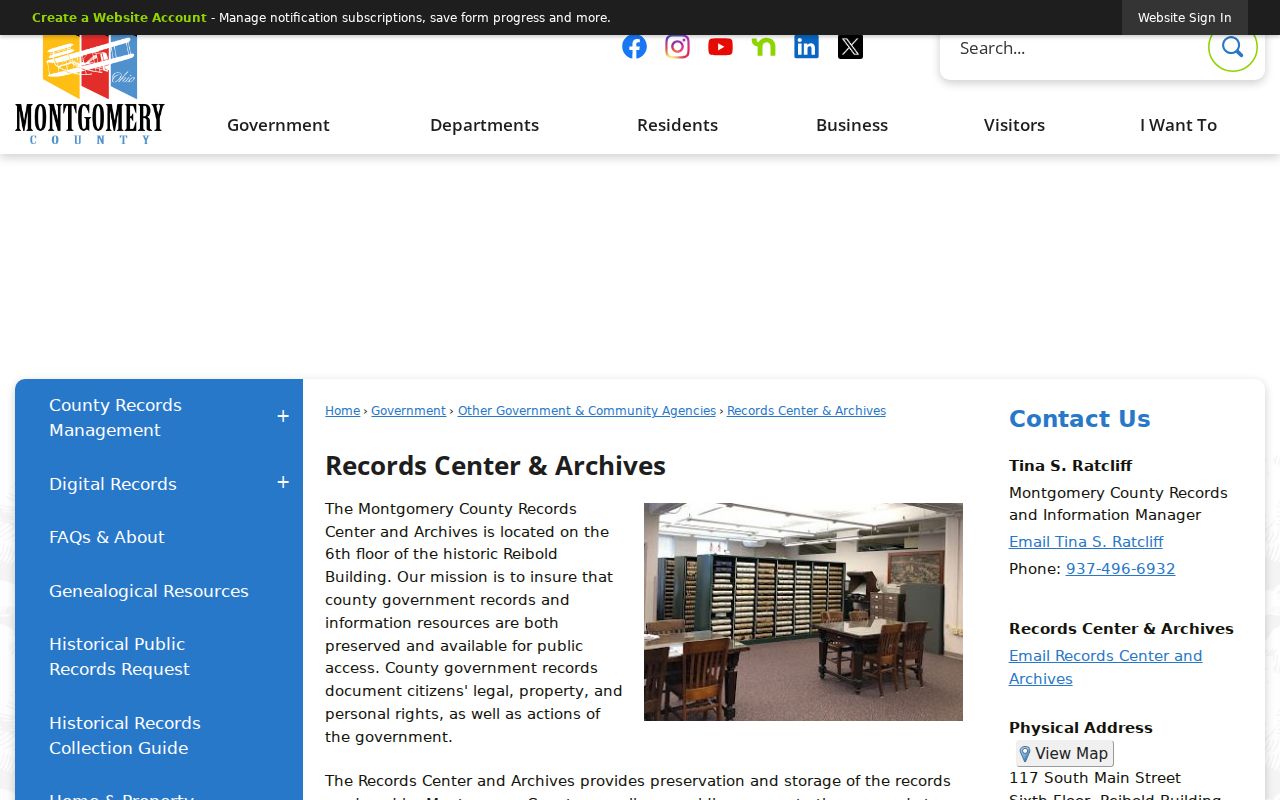
The research area is on the sixth floor of the Reibold Building at 117 S. Main Street in Dayton. Listed research-room hours are weekdays from 8 a.m. to 5 p.m.; the contact number is 937-225-6366. A targeted request for a deed index, tax duplicate, plat, abstract record, or identified deed volume is more likely to match the archive's retrieval system than a request for a broad list of past residents.
Washington Township Property Address Key
Normalize the address before searching names. Do not erase its older form, though. Keep the present address, base street name, postal city, and parcel ID in one set of notes. Add the legal description to that set. The Auditor's address form asks only for a house number. It wants the base street name, with no direction or suffix in the input. Save those omitted details anyway. They help distinguish similar streets. They also explain why an older Washington Township record looks different.
The legal description is the durable key. In unincorporated areas it may rely on township, section, and range. It may not use a city lot at all. A postal city such as Dayton proves nothing about local jurisdiction. An old address can appear as Centerville, Washington Township, or Woodbourne. It may also show a subdivision, a lot, or a road community. Confirm the parcel in the Auditor record first. Check GIS as well. Only then treat a similarly numbered address as the same place.
Note. Keep the original source wording beside the normalized key so a later researcher can see the record's actual place name and address form.
Tracing Washington Township Past Households
Start the deed chain with the current parcel. Never begin with an assumption about who lives there. Use the Auditor's address, owner, or parcel search to pin down the candidate parcel. Retain its parcel ID, displayed situs address, legal description, owner field, and stated tax year. The Auditor result establishes assessment and tax context. It does not name every person who used the address.
- Confirm the target parcel in the Auditor record and GIS. Copy the legal description and parcel ID before moving to a deed search.
- Use the Recorder's RISS entry route or an office terminal to locate the current owner's recorded acquisition. RISS presents a login or disclaimer gate, so do not assume a particular remote search range.
- Read the actual instrument. Record its number, recording date, grantor, grantee, and legal or plat description.
- Search the seller as an earlier grantee to locate that person's purchase, then repeat the comparison backward. At every step, test whether the same lot, tract, subdivision, or legal description persists.
- For an older gap, ask the Recorder or Records Center for the applicable grantor-grantee index, deed book, tax duplicate, plat, or abstract reference. State the parcel and date range in the request.
- Grantor
- The party transferring or conveying an interest in the recorded document.
- Grantee
- The party receiving the interest in the recorded document.
- Chain of title
- The dated sequence of instruments used to follow ownership interests in the same described parcel backward.
- Legal description
- The lot, tract, plat, township-section-range, or other recorded land description used to distinguish the parcel when address wording changes.
Washington Township Previous Residents Tax Duplicates
Tax duplicates form the bridge between deed records and household sources like a city directory or resident lookup. The county's Home and Property Research Guide assigns tax records from 1984 forward to the Auditor. Duplicates covering 1803 through 1983 rest at the Records Center. The guide also advises keeping the legal description handy. It points researchers to the Recorder, Auditor GIS documents, or the Records Center whenever an older property trail needs reconciling.
Annual values, payments, delinquencies, improvement notes, and transfer indications all offer timing clues. A sharp value shift may point to construction, a correction, a revaluation, or a parcel change. It proves nothing on its own. The shift is a reason to inspect neighboring documents. It is not evidence that a named resident moved in or out. Match the tax year against a deed, a dated map, or a Township file before claiming what changed at the address.
Washington Township Previous Residents Image Clues
County Engineer historic aerial imagery begins in 1938. The program holds scanned and georeferenced material for 1938 through 1995. Orthorectified imagery runs from 2000 forward. An image can show a structure, road pattern, or subdivision context visible by a given date. It cannot establish occupancy, a precise construction date, or who stood on the property.
When an image or tax record raises a focused question, request the related Township record. Ask for the permit, zoning, hearing, or case file by address or parcel. Washington Township Development Services uses an OpenGov route for current applications, tracking, updates, and payment. It publishes no comprehensive historic address search. A released file may name an applicant, owner, or agent. Treat it as evidence, not as a household list.
Washington Township Past Residents Household Pairing
Deeds trace a title, while directories, newspapers, and census pages add a dated household layer. Local library pages publish no exact list of Washington Township, Centerville, criss-cross, or reverse-directory holdings. Ask Dayton Room or Washington-Centerville Public Library staff. They can confirm the edition, coverage, and page before relying on a directory. A name printed at an address is evidence for that publication date. It is not proof of ownership or unbroken residence for past residents of Washington Township.
- Bring the verified parcel, the old and current address forms, an estimated year, and name variants to the Dayton Room or WCPL request.
- Copy the actual title, edition year, page, street wording, and any relevant publisher key. If a criss-cross section exists, record its section and page as a separate citation.
- Pair the directory date with the nearest released federal census schedule. Federal population schedules are released on a 72-year cycle, and 1950 was the latest released schedule at the research date.
- Compare household composition, age, spelling, community label, and address context. Keep a conflict visible rather than merging similar names automatically.
- Use a dated newspaper, obituary, cemetery, probate, or deed record to test a move, death, estate transfer, or name change.
The Washington Township city directory guide walks through the historical collections in depth. Here they do one smaller job. A past-residents lookup can test who shared an address in a given directory year.
Woodbourne's Washington Township Address Forms
Woodbourne matters for anyone tracing an older Washington Township address. Centerville-Washington History places its early settlement and platting between 1803 and 1810. Its official registration came in 1817. The village declined as an industrial center by roughly 1860. Suburban growth came much later. So a record may say Woodbourne even when the parcel today carries a Centerville or Dayton postal city.
Run Woodbourne, Washington Township, Centerville, and Dayton as parallel searches in catalogues and indexes when the era fits. Never force a historic label onto a modern street address without a plat, map, legal description, or other documented tie. The township publishes no authoritative street-renumbering or conversion table. An apparent number change therefore needs its own documentary verification. Ideally, use the deed or parcel records that connect both forms of the address.
Washington Township Previous Residents at Archives
The archives matter once a chain hits a pre-digital index. Or a directory citation needs independent context. The Records Center holds historical marriages from 1803 through 1959, divorces from 1876 through 1949, and wills and estates from 1803 through 1983. Its index reaches 1938. Deed coverage is stated two ways. Its main page gives deeds from 1805 to 1933. The county guide gives deed records from 1805 to 1971. It also gives deed indexes from 1805 to 1928. Note the conflict, then ask staff which books and indexes cover the period you need.
Arrive with the full name, spelling variants, address forms, a parcel or legal description, the record class wanted, and an estimated date range. Staff retrieval is built around those details. A surviving deed, probate entry, tax duplicate, or map is a dated record lead. It does not prove the person occupied the address at any other time.
Washington Township Previous Residents Alert Checks
The Montgomery County Recorder Fraud Alert Notification service watches property documents. It does not search past residents. A registered owner gets notified when a new document is recorded against the property. Follow the alert to the referenced instrument through Recorder channels. Then read the document itself. Compare its legal description.
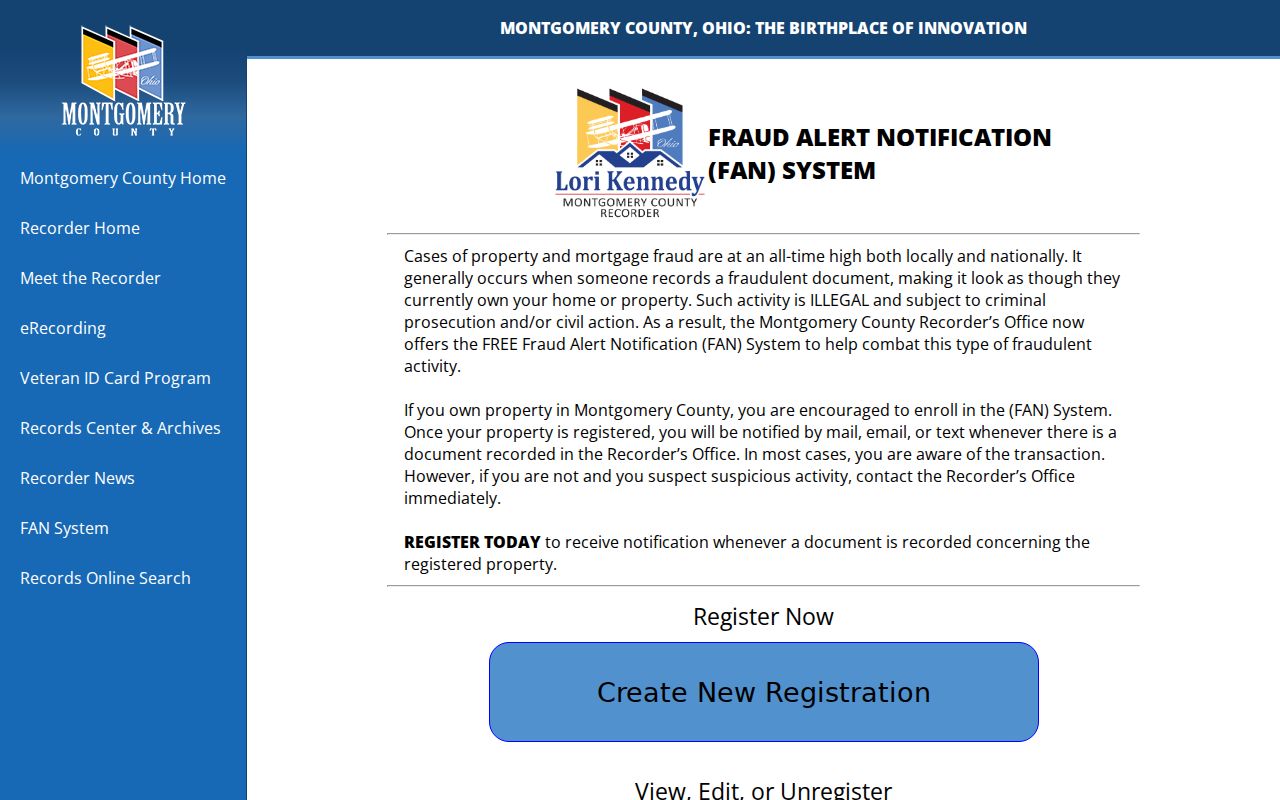
An alert is only a notification. The filing may be a routine mortgage satisfaction or another legitimate record. Never send money or personal details in reply to a message. Find the Recorder independently. Use the instrument number where one exists. Call the office if the document needs explaining.
Washington Township Previous Residents Evidence Limits
This kind of past-residents lookup suits house history, family history, heirs, and civic curiosity. Every claim should rest on a source date, a source role, and a citation. Owner, taxpayer, grantor, grantee, permit applicant, and directory-listed person are different roles. A mailing address, a property transfer, or an old listing alone does not show who was physically present on another date.
Lawful use. Use these records for lawful historical and personal research. Do not use an old address trail to stalk, harass, or harm any living person.
When records conflict, state it plainly. Keep both references rather than picking the convenient name or address. The strongest conclusion names the document, its date, the role it records, and the parcel or address form it uses. It also names the next record that would confirm the following step.